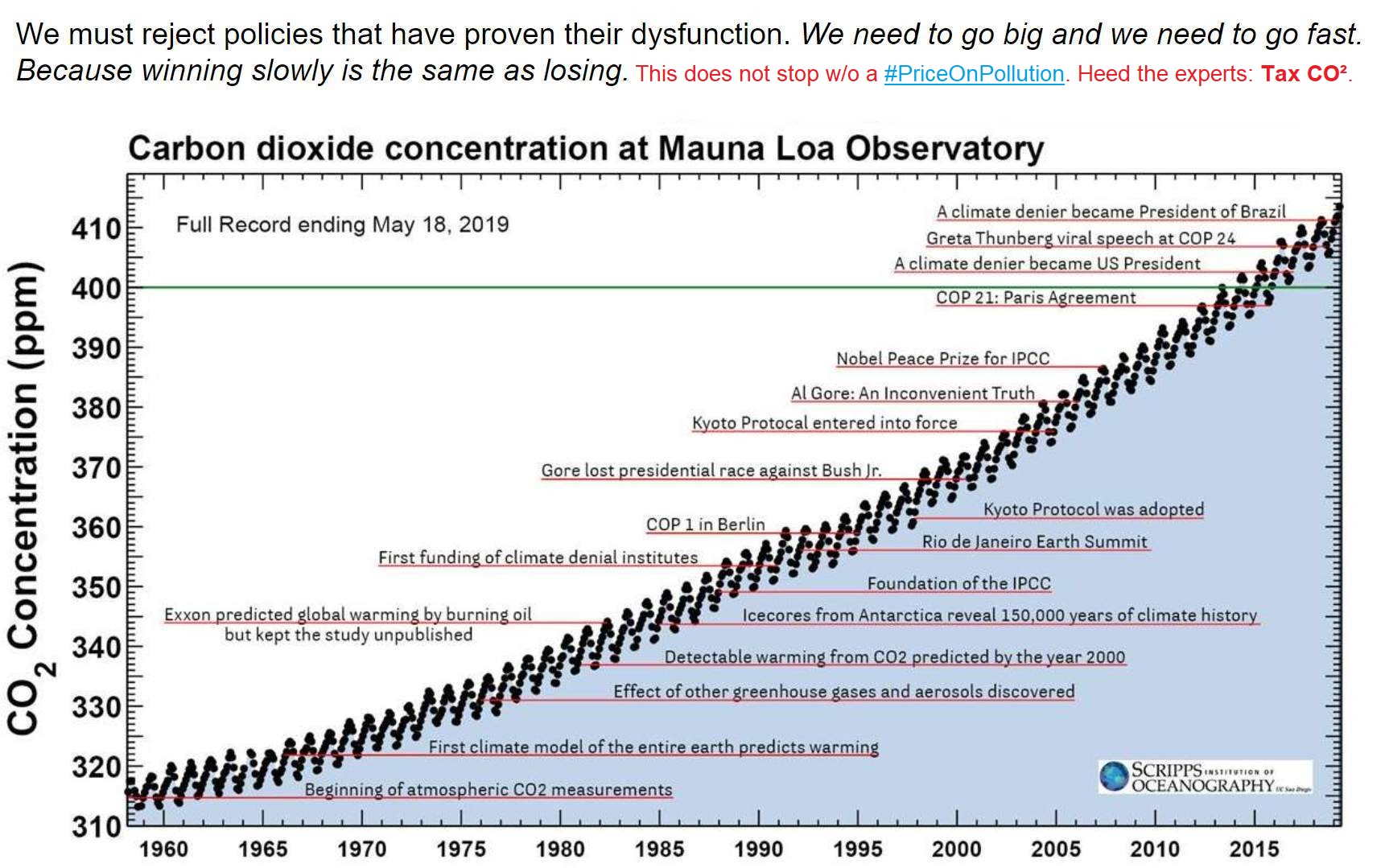
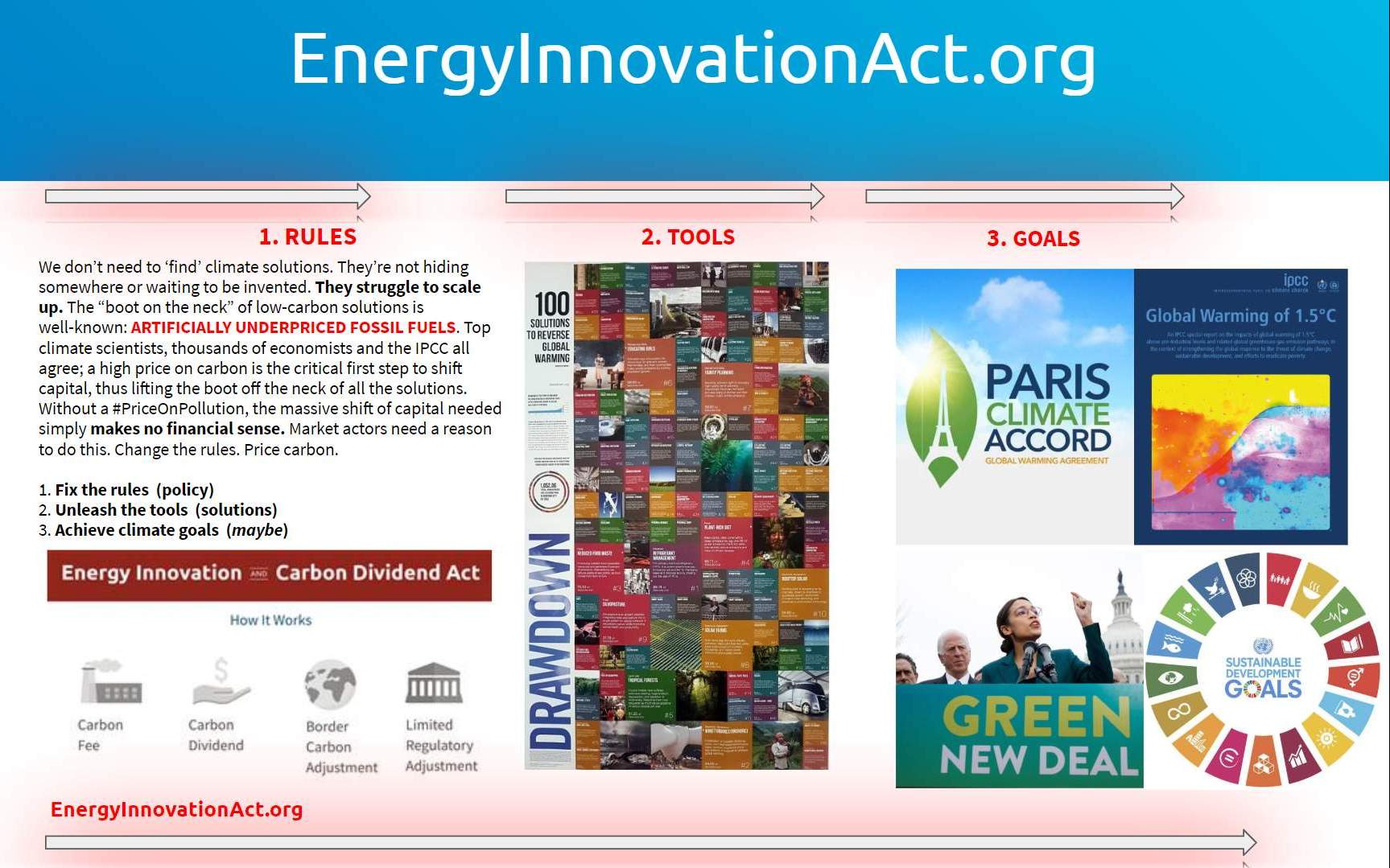
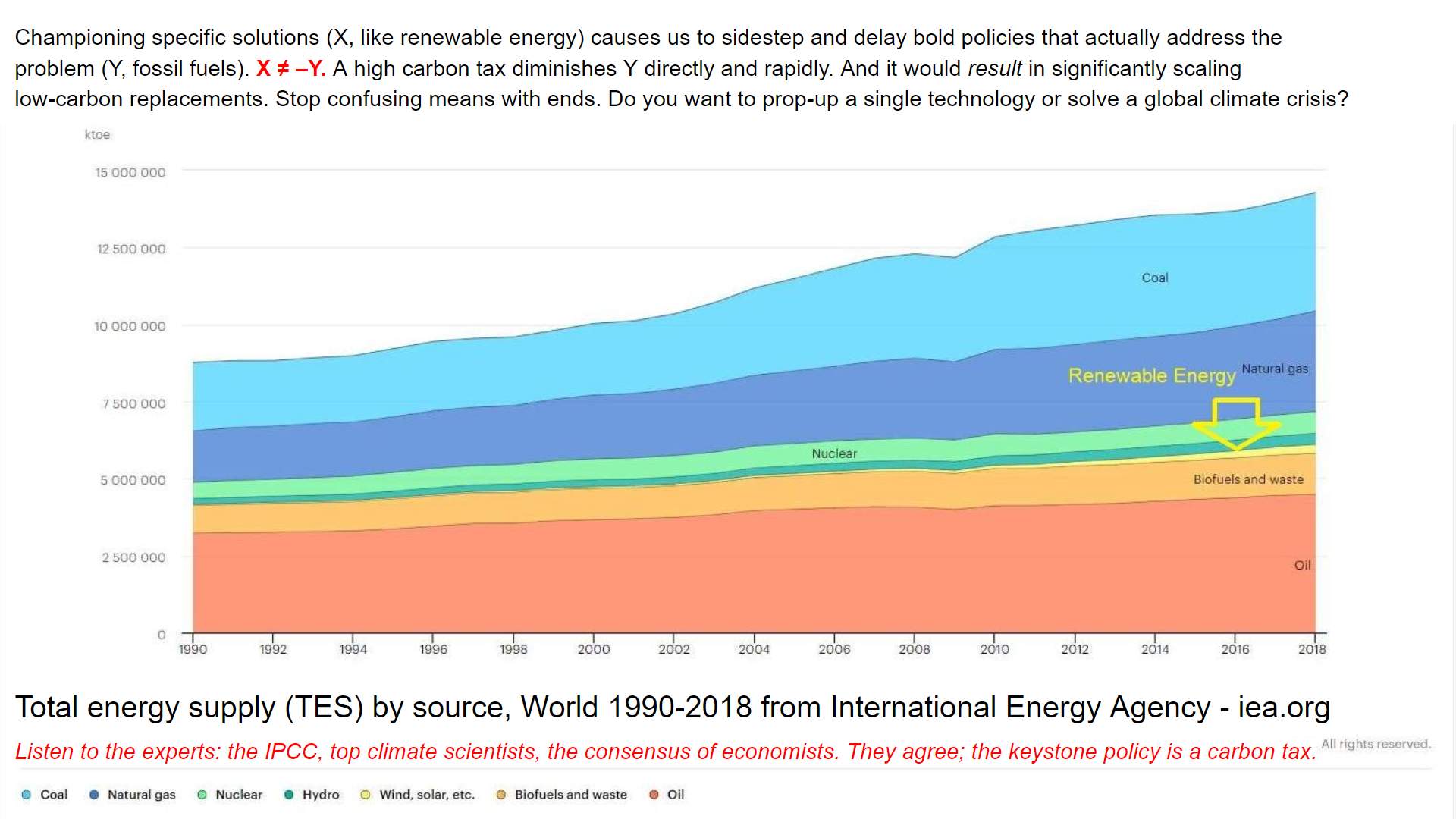
While a #carbontax is not a one-and-done silver bullet (a number of policies are needed), it is intellectually dishonest to conflate carbon tax policy with the solutions it would catapult. On one hand we have the solutions. And on the other, a policy that would accelerate them, while directly striking a blow at the actual problem; the continued investment (over $5 Trillion since the Paris agreement) in dirty fossil fuels that further deepen the climate crisis. Renewable energy does not displace fossil fuel extraction which only continues to grow, still accounting for ~80% of our energy mix (unchanged for over three decades) despite the amazing growth of renewable energy. To many, renewable energy has become a dangerous distraction from having to address the actual problem. It confuses means with ends, just like Germany did.
This picture of failure will continue until we heed the repeated, science-based directives of the IPCC; the scientists, the very own experts we claim to embrace and thousands of top economists from across the political spectrum including dozens of Nobel laureates.
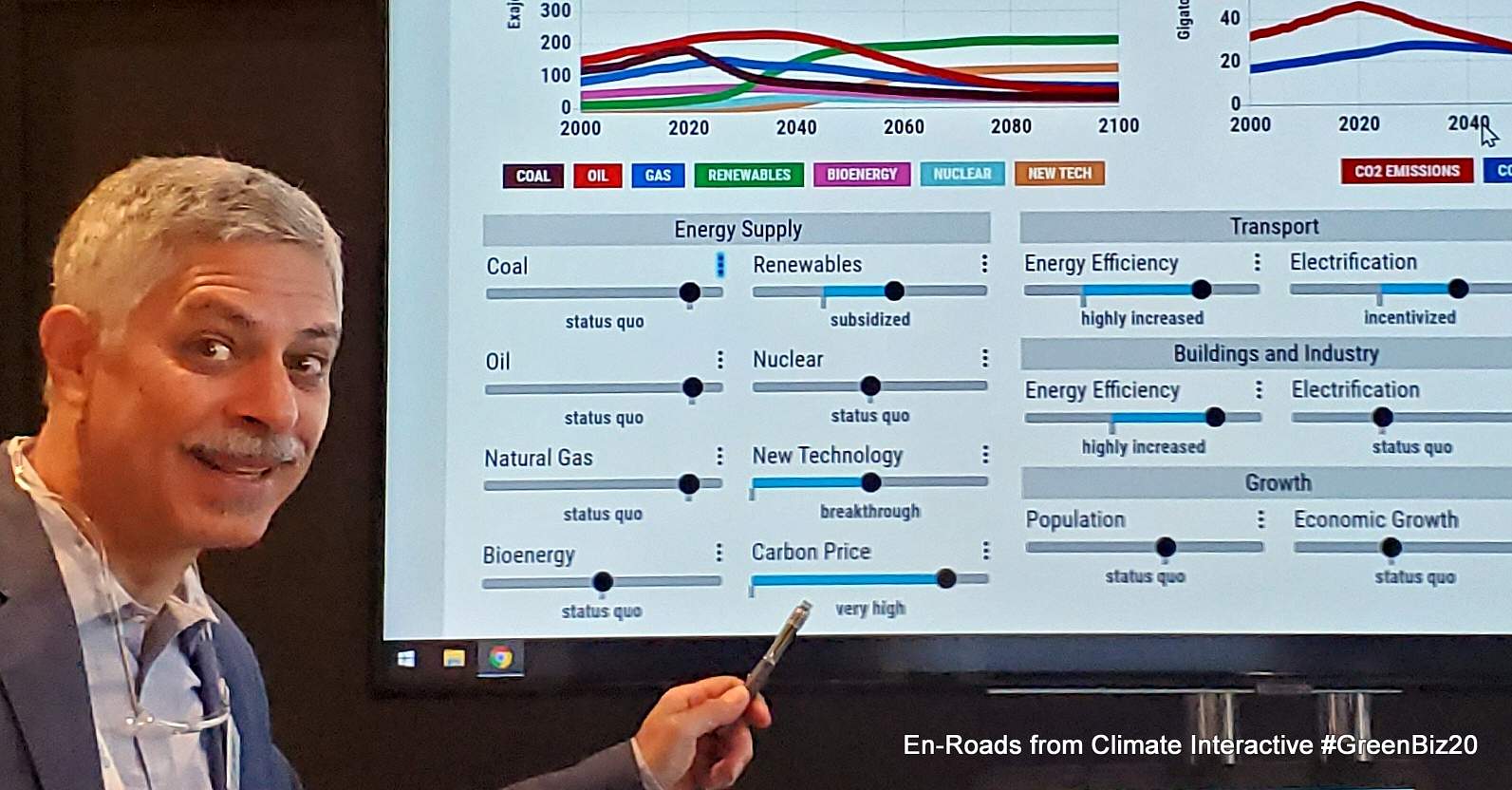
As we continue to call carbon pricing "a solution," we perpetuate the misunderstanding that it is like one of the tools in the toolbox. If pictures are worth a thousand words, the En-ROADS interface perpetuates this confusion. What if the carbon price control slider (one of 18) were made vertical instead? Would this be a turn-off for many people? Why does it look like the rest, even though it's not like the rest? That's the point of this tome.
|
This design helps others come to their own conclusions on their own. It does not attempt to point out the important distinction I have made clear below. Watch Climate Interactive's Drew Jones lucidly demonstrate the effectiveness for a certain policy choice.
Written by Greg Hamra, Nov 2, 2018 (just before the midterm elections) after a meeting with WA Gov. Jay Inslee in Miami who called carbon pricing "one of the tools in the toolbox." This is precisely the the opposite metaphor we should use.
Washington State's carbon fee initiative I-1631 is about much more than the
energy future of one state. If successful, it sends a positive signal to the
markets and to the other states working on similar carbon pricing initiatives.
It's hopeful all of these efforts will roll-up into a harmonized, national plan
with global reach. This is precisely what a number of groups including CCL,
CLC, and CPLC
are diligently trying to make a reality. They understand, without a price on
carbon, the many existing solutions and innovations necessary to avoid catastrophic
impacts of climate change will never be implemented at the scale and speed needed
to avoid disaster. The consensus view among thought leaders in the climate action
space is that we must fix the economics first. A widespread technological transformation
– the massive shift of capital – does not make financial sense without
a price on carbon. Low-priced dirty fuels stand in the way. That's why it is
the consensus view among climate thought leaders from across the political spectrum,
including a consensus of leading economists,
that we must fix the economics first and that a carbon fee
or tax is the most efficient model. (Nordhaus,
Greenstone, Friedman)
Ironically, many proponents of this policy response are slowing its adoption
and confusing voters by calling it “a solution” or “the best
solution.” It doesn't even belong on the list of solutions. It
is a policy that underpins all solutions.
On October 8th, 2018 the Nobel Prize in Economics was awarded to Yale economist William Nordhaus for his for decades of work on this very topic. Nordhaus makes clear, the solutions will not proliferate before we fix the economics; until the price of fossil fuels is increased; made more honest. Upon being notified of his Nobel win, Nordhaus was asked to highlight the most important things to do. (Sequence matters here.) He answered:
* - at the speed and scale to needed to address the climate crisis and avoid an overshoot scenarios and catastrophic tipping points. This transformation will only accelerate when there is a shift of captial away from dirty energy, toward the solutions.
We need all three but #3 depends upon items #1 & #2.
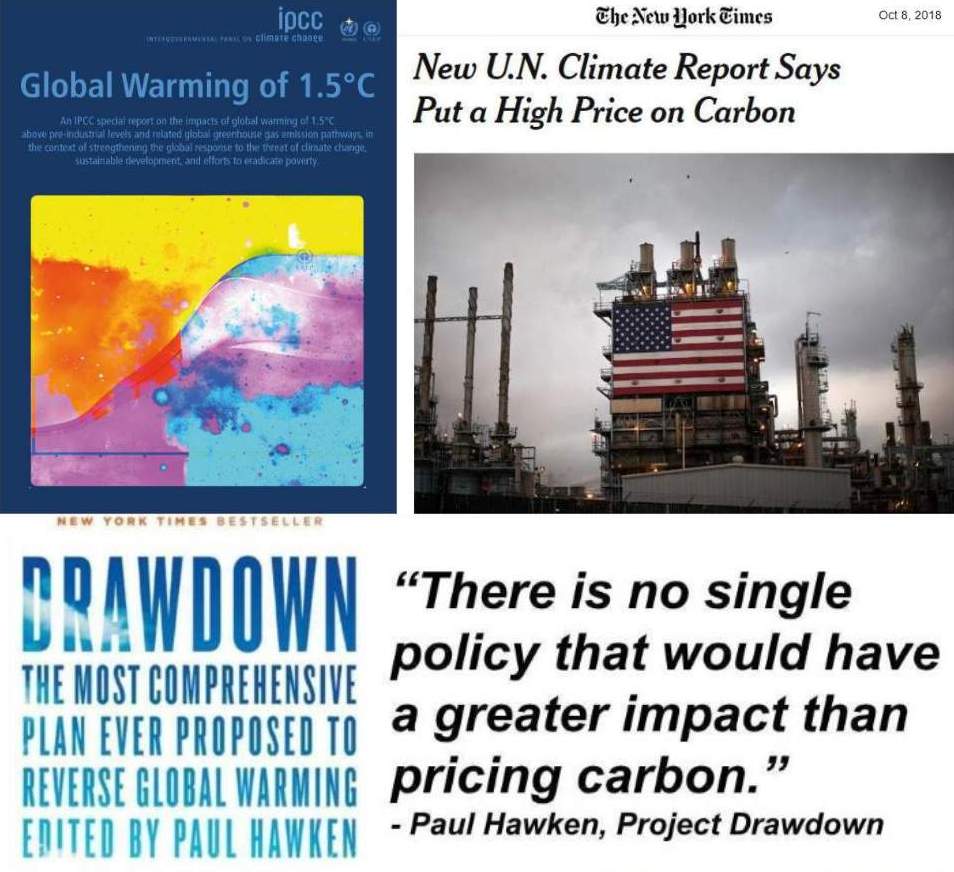
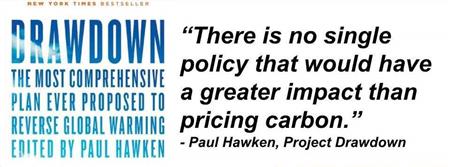
Paul Hawken, environmental thought-leader and creator of “Project Drawdown: 100 Solutions to Reverse Global Warming” has said: Carbon pricing is not a solution, it is a policy, and there is no policy that would have a greater impact than pricing carbon. (Note: carbon pricing is not listed in Drawdown because it does not belong on a list of solutions.)
Mentally lumping this crucial policy in the toolbox alongside all the actual carbon reducing solutions miscategorizes this critical policy, perpetuates a dangerous misunderstanding, and slows progress toward solutions and goals. Carbon pricing does not compete with ‘solutions’ like renewable energy or your community compost program or your Tesla.
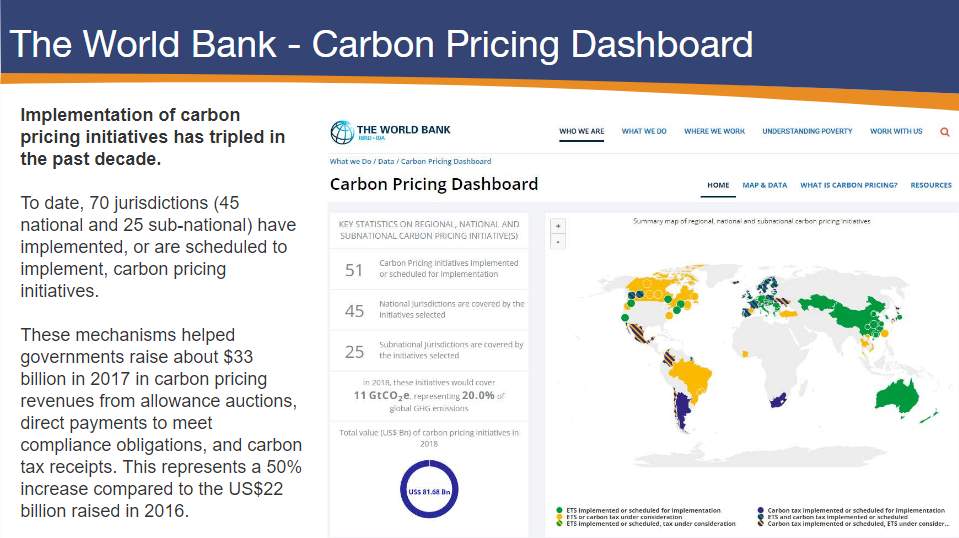
Instead, it is a policy mechanism that is crucial to accelerating all solutions. As such, carbon pricing is not “one of the solutions” in the toolbox. Rather, it is the key to the toolbox, the “solution-multiplier.” Right-pricing carbon will level playing field, allowing low-carbon solutions to compete, while also slowing fossil fuel extraction and incentivizing efficiency and conservation.
But this will never happen as long as we leave in place the fundamental barrier blocking the widespread adoption of low-carbon solutions; artificially underpriced fossil fuels that do not represent their true cost to society. When polluters can pollute for free (#freelunch), this creates a classic marketfailure.
Policymakers, corporates and climate hawks who understand the critical need for pricing carbon must stop lumping it alongside the actual solutions, the technologies or practices that reduce greenhouse gases by avoiding emissions and/or by sequestering carbon dioxide already in the atmosphere. On one hand we have solutions. And on the other, there's carbon pricing. Two different things. Solutions become financially viable only after we right-price carbon. Fixing the economics is a prerequisite, a critical catalyst needed to spark market transformation and unleash all low-carbon solutions at scale. When it comes to the solutions, the winners and the losers will be determined by the market; by consumers.
If we’re going to move the needle in any significant way we have to move the markets. Let's send market actors the price signal they need to shift capital, to “ditch the dirty,” and redirect massive investment in clean energy and low-carbon solutions. Let's Put A Price On It.
Confusing means (X) with ends (-Y) means promoting specific technological solutions while avoiding the bigger problem of reducing global GHG emissions. It means conflating the scale up specific low-carbon solutions vs. addressing the root issue, GHG emissions; primarily fossil fuels. Germany proved this massive failure by championing a single technology (renewable energy) rather than targeting emissions. The result: Germany's GHGs skyrocketed. This is why the IPCC's directive is to put a high price on carbon. This addresses the carbon challenge at an economy-wide scale, rather than thru an indirect, whack-a-mole approach that many hope will magically turn into emission reductions.
Newsflash. It doesn't work this way. Because X does not equal Y, or more accurately, X ≠ –Y. Need proof of this?
In the 5 years since Paris Agreement, 60 of the largest banks invested $3.8 TRILLION into the fossil fuel industry. Legally. Breaking no rules. Following established tax policy.
How many solar panels fixes that? It's not enough to change our light bulbs, diets, or individual energy choices. We have to change our leaders and our laws. We have to change the rules.
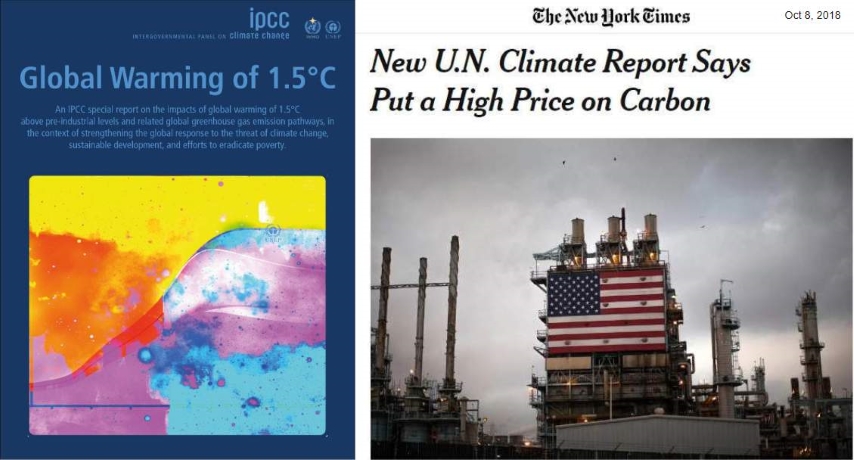
Here's an idea: Heed the experts;
the
IPCC, the top scientists, and the
thousands of economists from across the political spectrum:
We CANNOT meet Paris or U.N. IPCC climate targets without a high price on carbon.
A brief history:
October, 2018 - IPCC releases its landmark 1.5° Special Report. Summary:
Only a a high price on carbon is needed to meet targets. Only this can steer
us away from catastrophic overshoot scenario.
November, 2018 - The Trump White House famously released the 4th National Climate Assesment on Black Friday, the day after Thanksgiving, 2018.
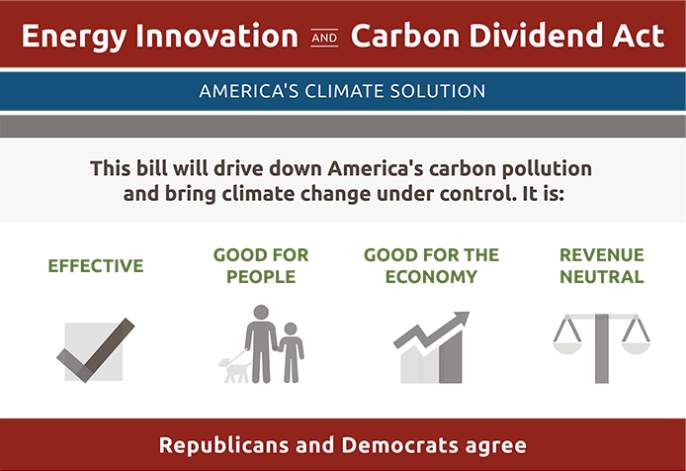
Two business days later, (Nov 27, 2018) the first bipartisan climate bill in nearly a decade was introduced in the House of Representatives, the Energy Innovation and Carbon Dividend Act - H.R. 7173, in the lame-duck Congress.
December, 2018 - A bipartisan, Senate companion bill by the same name was introduced makit it the first time in the history of our country we've had bipartisan, bi-cameral support for any type of climate legislation.
January, 2019 - Shortly after the 116th Congress took office, the House bill was reintroduced as H.R. 763. By the end of that Congress it had 86 House co-sponsors. The second leading carbon pricing policy had just 9 co-sponsors. The Koch Brothers attacked one of them. The clear leader.)
The bill was reintroduced in the 117th Congress as H.R. 2307. It now has 96 House co-sponsors.
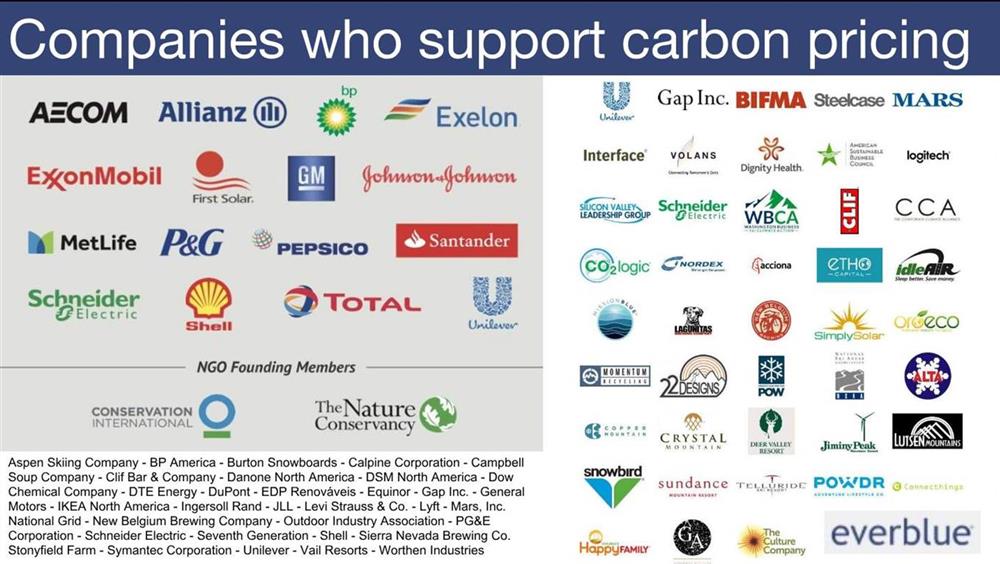
Since that time, the Energy Innovation & Carbon Dividend Act it has garnered over 1,300 business endorsements, official support from 160+ local governments and many more.
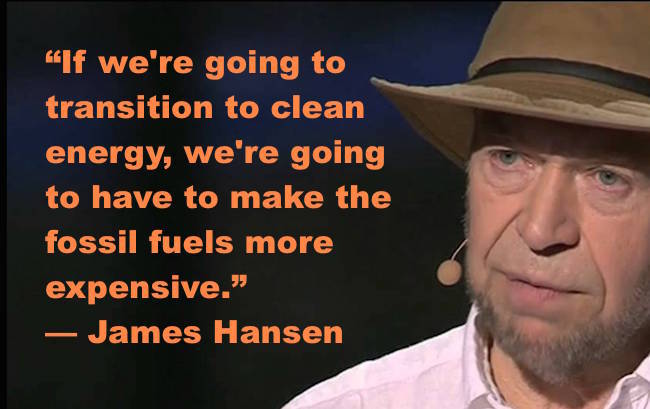
It's the most aggressive climate legislation ever introduced in our country, far exceeding Clean Power Plan targets and Paris aspirations. (Dr. James Hansen explains.)
The "EnergyInnovationAct.org" is the only active legislation in accordance with drawdown targets mandated in the recent IPCC 1.5° climate report.
Simply put, we will not decarbonize our future without de-profitizing carbon.
The Energy Innovation and Carbon Dividend Act (H.R. 2307) will help reduce America's carbon pollution to net zero by 2050. It puts a fee on carbon pollution, creating a level playing field for clean energy. The money collected from fossil fuel companies goes to Americans in the form of a monthly 'carbon cash back' payment so that everyone can afford the transition.
Fareed Zakaria explains the three pillars.
This momentous legilsation comes after more than a decade of hard work, setbacks, successes, and learning from past mistakes (like Waxman-Markey, France, Washington state's multiple attempt(s) to rollout a statewide carbon tax, etc.) to put a #PriceOnPollution. It comes after literally thousands of meetings with Members of Congress on both sides and input from policy experts from Environmental Defense Fund (EDF), The Nature Conservancy (TNC), and others.
We have no shortage of solutions or aspirational goals. What's missing is a catalyst to spark accelerate these solutions at the speed and scale needed to avert climate disaster. THIS is the vehicle we've been waiting for. Get on board now. It's GO time.
Learn more at EnergyInnovationAct.org
___________________
Words Matter - Letter to the Editor (200 words)
Orgs:
Words matter: